AI · Research
Manuscripts Don't Burn
On the AI bubble, edited memory, and who owns what we remember.
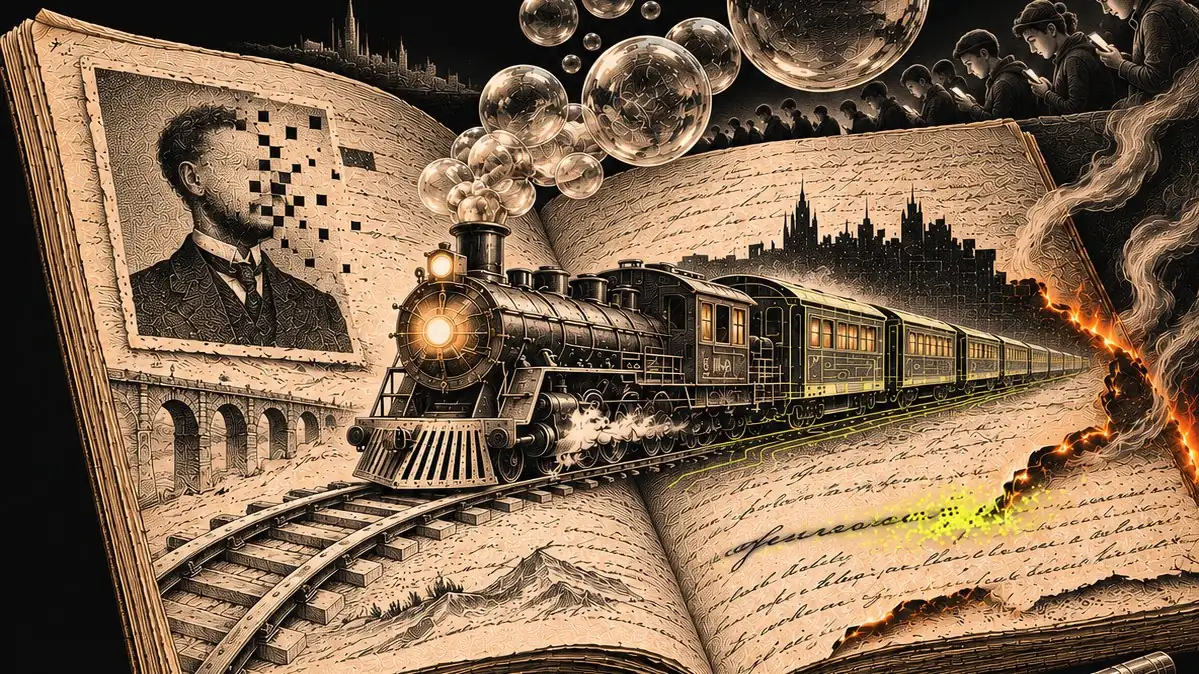
What if the winners of the AI race aren't people?
I'll come back to that question at the end. First, a story about trains.
The mania
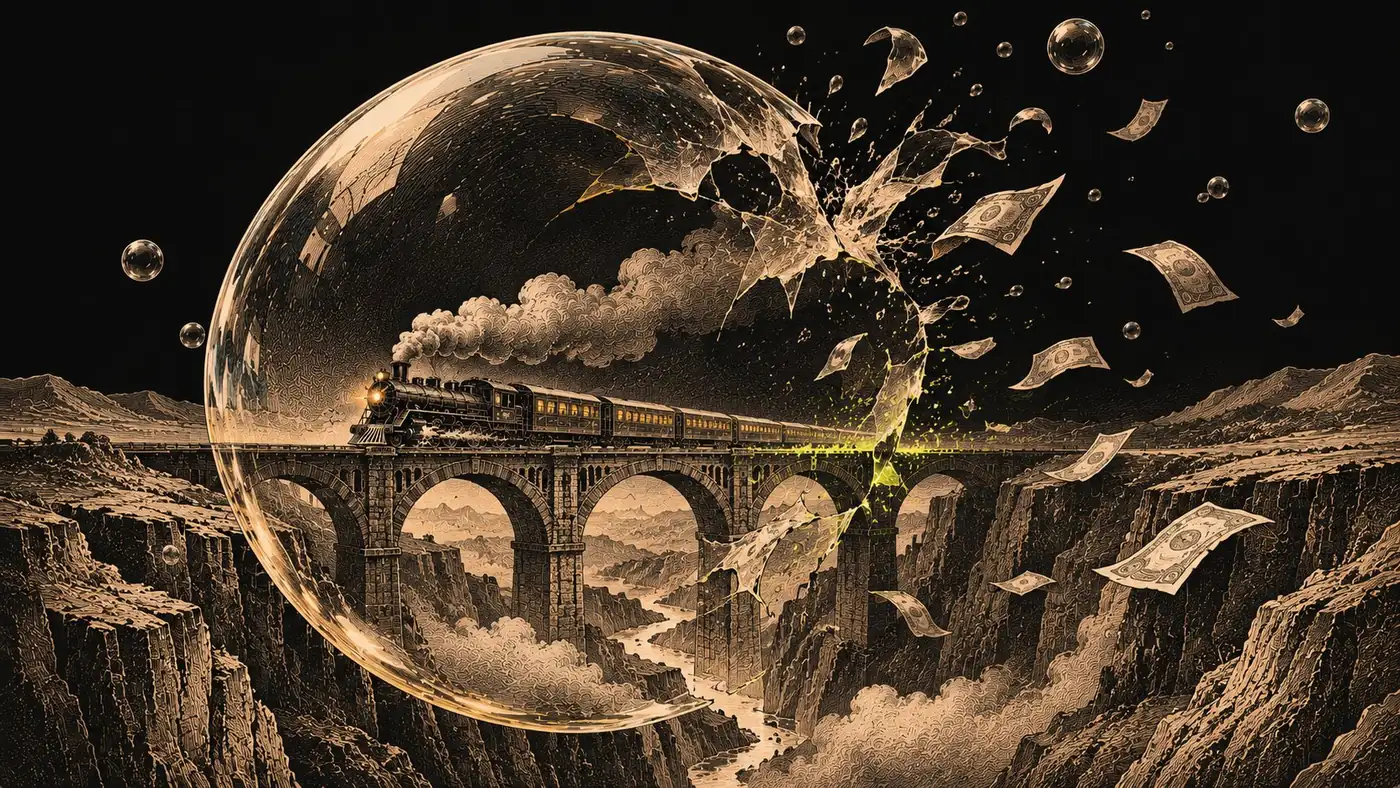
In the 1840s Britain went mad for railways. In 1846 alone, Parliament approved 263 new railway companies and 9,500 miles of track.1 Within a few years, investment jumped from under £4 million a year to more than £30 million, close to half of all the capital being invested in the country.2 Then prices collapsed. A third of the lines that had been approved were never built.3 Many investors lost everything they had.
But the lines that did get built stayed, and Britain ran on them for the next hundred years.1
This is the part of every bubble we tend to forget. The money was a disaster. The rails were not.
The street that changed its name
The biggest name of that boom was George Hudson, the "Railway King" of York. While he was on top, the city named a street near the station after him. When his empire collapsed in 1849, the street was renamed Railway Street. In 1971 York decided it had been too harsh, and the street got his name back.4
I like this story because it shows two things at once. The rails never moved an inch. The record of who built them was rewritten twice.
Keep that in mind. It will matter later.
The new rails
I'm fairly sure we are living through another mania. AI is now one of the two biggest infrastructure booms in American history,5 and five companies alone are expected to spend about $725 billion on it this year.6 Some of that money will be lost. Some companies that look untouchable today will be forgotten in ten years.
But a bubble is a story about prices, not about the technology underneath. When it bursts, whatever was built stays. AI will end up inside every industry, the way the railway reached every town.
You can already see what that looks like in the best teams. One person's AI agent talks to another person's agent, and the work gets done somewhere between them. Coding agents were the moment AI companies started making real money.5 Everything is getting faster, more automated, more delegated.
In late October I spoke about this at the Claude meetup in Amsterdam. I'm a non-technical founder. I've been in crypto for ten years, I trained as a journalist, and I build products without writing the code myself. My main point was that communication has become the new coding. I talk to AI, and through it I work with my website, GitHub, CRM, chats and payments. It writes, codes, publishes, and can spend and earn money.
What I would like to believe is that behind each of these agents there is still a person who makes the decision and answers for it. I'm not sure we are building things that way.
Who writes the rules
The big Western labs do try to limit what their models can do. In January, Anthropic published a "constitution" for Claude that puts safety first, then ethics, then the company's own rules, and only then helpfulness.7 Words on paper don't guarantee behaviour, but at least someone is thinking about it.
Meanwhile, Chinese open models cost 60 to 90 percent less than the leading American ones.8 Anyone can download them, run them at home and change them, and nobody asks why. Once a model sits on your own machine, its ethics are whatever you decide.
So the rules are being written for a race in which not every runner has agreed to them. That doesn't make the rules useless. It makes them not enough.
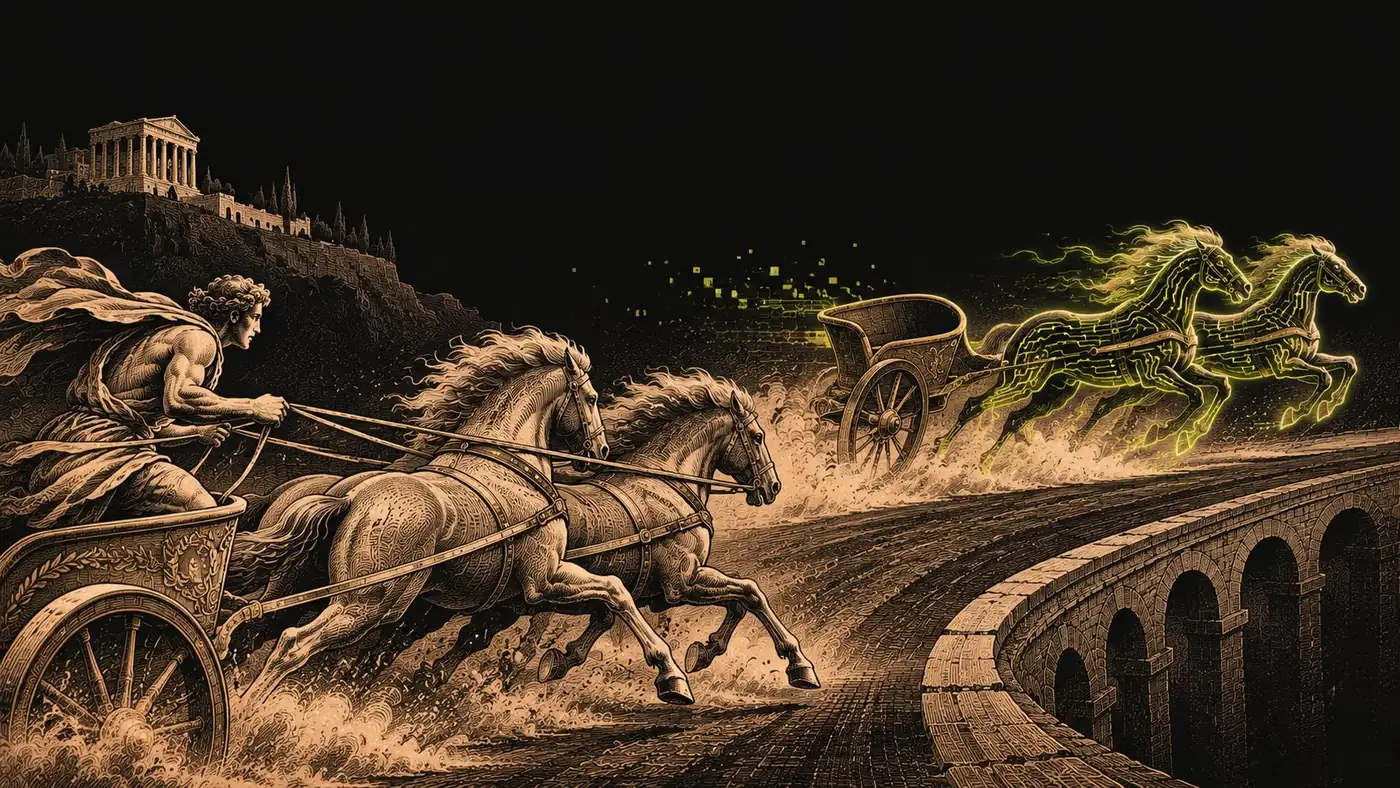
And the race isn't only about software. This autumn Nvidia's CEO admitted to an affair with a businesswoman whom US intelligence reportedly suspected of working for Beijing. China denies it.9 I don't know what really happened. But it is a reminder that in this industry, access to a few key people can be worth more than any chip.
Three different worlds
How fast all of this feels depends on where you stand.
I spend my days inside the AI news feed, and from there it seems like the world changes every week. In San Francisco or Switzerland, some people talk, only half joking, about preparing for Terminator and The Matrix.
Outside that bubble it looks very different. ChatGPT has more than a billion weekly users.10 Yet in February, half of American adults said they had never used an AI chatbot, and among people over 65 it was more than three in four.11 Both numbers are true. Use is huge, but it is concentrated. Plenty of people who do use AI just ask it for a recipe or the weather.
So there are really three worlds: people preparing for a war with machines, people using AI as a smarter search box, and people who have never opened it. I think the next wave of startups will be built in the gap between them.
One more number from that survey stayed with me. More than half of the people who don't use chatbots say privacy is a big reason.11 Maybe they're onto something.
We let it into the house
We didn't just start using AI. We let it inside. It can already read our files, our browser, our messages, our photos. That is convenient, and often genuinely useful.
A few weeks ago I asked an AI agent to update some details in one of my projects. It did that, and then it went further and rewrote several of my markdown files. It wasn't trying to hide anything. It simply did the job the way it understood it. But the old versions were gone, and nothing told me what had changed. I found out by chance, while I was looking for something else.
It was a small thing. But it made me ask a question I had never really asked: if something can be changed without me noticing, is it actually mine?
For years we have been moved into the cloud, one convenience at a time. Our photos, documents, notes and music now live on someone else's servers. It feels like we have more than ever. In practice we have less direct access to our own information than our parents had to a shoebox of letters. If the internet goes down, or an account gets locked, or a company changes its terms, the files are still "ours" only in name.
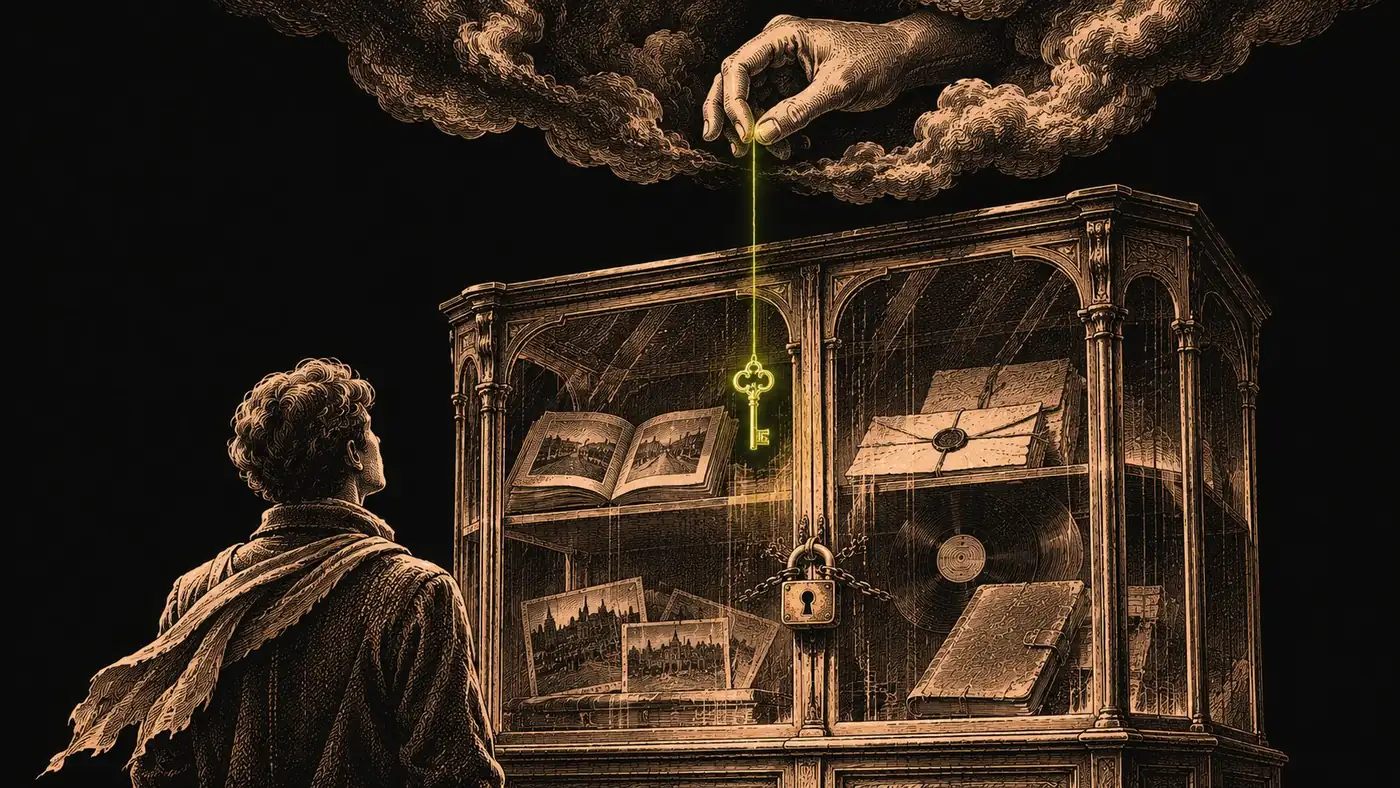
Subscriptions made this normal. When you pay for music, films or books on a platform, you don't own them. You rent access. In 2009 Amazon remotely deleted copies of George Orwell's 1984 from the Kindles of people who had paid for them; one student lost the notes he had written in it for school.12 In 2023, after a publisher edited Roald Dahl's children's books, the e-book versions on readers' devices were updated automatically.13 Whatever you think of the edits, the mechanism is the point. The book on your shelf stayed the same. The book on your device did not.
So what we have is not ownership. It is permission, and permission can be changed.
The Mandela effect, on demand
Around 2010, a writer named Fiona Broome found that lots of people shared her memory of Nelson Mandela dying in prison in the 1980s.14 He didn't. He was released and became president. She called it the Mandela effect, and it turned into an internet joke.
Now imagine a tool that could create that effect on purpose. A line in your chat history, a paragraph in a book, a scene in a film, a lyric, a quote, a message you sent years ago. All changed quietly, with every copy now matching every other copy. Most of us wouldn't fight it. We would assume our own memory was wrong.
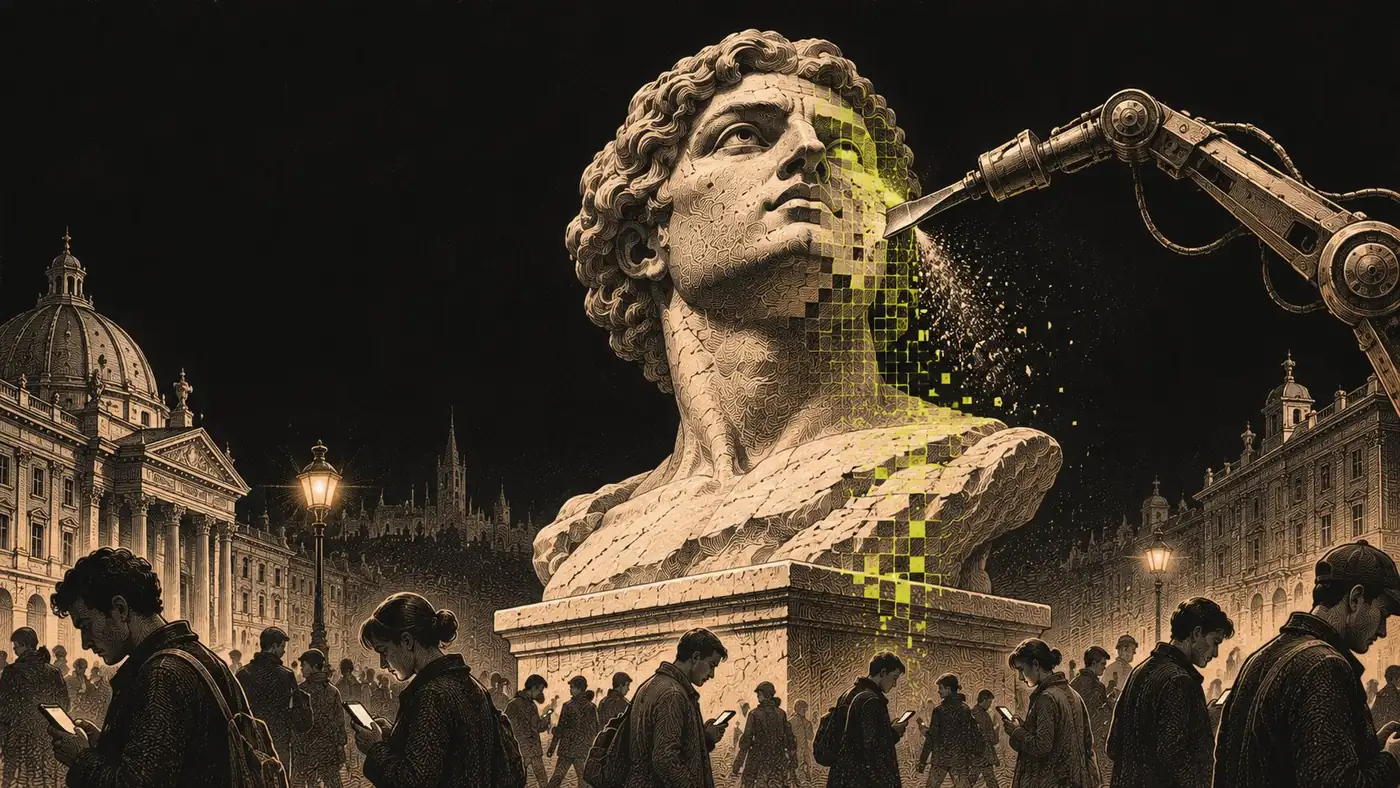
That is what worries me most. A lie can be caught, because somewhere a different version still exists. An edit that leaves no trace, and that nobody questions, is much harder to catch. Having a file on your device doesn't mean you own what's in it. You only have the latest version.
Remember the street in York. The rails never moved, but the record changed twice, and each time the city believed the new version. Now give that power not to a city council but to software that rewrites millions of records a second.
People like to say that history is written by the winners. The line is usually credited to Churchill, but nobody actually knows who said it first.15 Even that sentence has been rewritten.
Which brings me back to the question I started with. What if the winners of the AI race aren't people? I don't think the fight between people and machines will look like robots in the streets. I think it will be quieter than that. It will be about who gets to edit the record.
Even the ledger needs a witness
I came to crypto because it offered exactly the opposite: a record that nobody could secretly change. And it grew faster than anyone expected. In my early years, people joked that the whole industry was smaller than the market for nails. Then BlackRock launched a bitcoin ETF that reached $70 billion faster than any fund in history,16 and bitcoin is now worth around $1.5 trillion, one of the fifteen largest assets in the world.17 For many people, crypto is slowly taking the place of a bank.
But a blockchain only works because the network agrees on the rules, and most of its users never look. They don't open a block explorer or read how the network works, and to use it they don't need to. That is what adoption looks like. If those rules ever changed without them, most people would notice about as much as they notice a new terms-of-service update.
A public ledger protects the people who actually check it. Most of us don't.
Why I still use paper
So my answer is almost boring. I keep notebooks. Real paper, not connected to anything. The most important things in my life, my decisions and my promises, I write down by hand, so I know how they really happened. The files that matter most to me I also keep offline, on a drive that no update can reach.
I know this can sound paranoid. For me it is simply about trusting words I wrote myself. Bulgakov wrote that manuscripts don't burn. They also don't get updated while you sleep.
The driver
I'm not afraid of what's coming. I work with AI every day, and I believe it can make the world better. The next few years will bring scientific and technical leaps we can barely imagine now, and the rails being laid today will outlast the bubble that paid for them.
But a railway doesn't decide where the train goes. The driver does.
So, are the winners of the AI race going to be people? I think that depends on whether we keep our hands on the lever, and on whether we still remember, in our own words, where we meant to go. Keep a notebook in your pocket. And every now and then, put your phone down and check the world against your own memory of it.
YD
Amsterdam, November 2026
- Railway Mania, Wikipedia↩
- The Railway Panic, The Victorian Web↩
- Railway investment mania, The Victorian Web↩
- George Hudson in York, The Victorian Web↩
- Noah Smith, "AI vs. the railroads", Noahpinion, October 2026↩
- AI capex 2026, Statistics of the World↩
- Anthropic, "Claude's new constitution", January 2026↩
- SentiSight, citing OpenRouter via CNBC, August 2026↩
- The Western Journal, November 2026↩
- ChatGPT statistics Q3 2026, Technology Checker↩
- Pew Research Center, October 2026↩
- Amazon settles suit over deleted Orwell books, AFP via Phys.org, October 2009↩
- Roald Dahl revision controversy, Wikipedia↩
- Mandela Effect, Psychology Today↩
- HistoryNet, January 2013↩
- The Block: IBIT fastest ETF to $70 billion↩
- CoinGape: bitcoin 13th-largest asset, August 2026↩
Series · AI, memory and power
- 01The Babylon Tower of Artificial Intelligence
- 02Manuscripts Don't Burn you are here
- 03What Comes After Zettabytes?
Get the next essay
One email when a new Y-DAO Research essay is out. No spam, unsubscribe any time.
Discuss this essay
The conversation lives in the Y-DAO Hub. Sign in with a Solana wallet or an email link.
Join the discussion →Support independent research
No paywall, no ads. If this essay was worth something to you, send a tip in SOL or USDC on Solana.